Central Coast, NSW
Free on-site quotes for garden gazebos — council approval guidance included.
Fill in our quote form below and we’ll be in touch.
But here’s the thing most homeowners in Gosford, Terrigal, and Erina discover pretty quickly – creating that picture-perfect garden retreat takes more than just good intentions and a trip to Bunnings. That’s where garden gazebos come in. They’re not just decorative structures sitting in your yard – they’re focal points that define your outdoor space, provide sheltered areas for year-round enjoyment, and honestly, they can turn an ordinary backyard into something your neighbors actually stop to admire. And when you’re dealing with our coastal climate and sandy soils, having someone who knows how to build garden gazebos that’ll last becomes pretty important.
Garden gazebos act as beautiful focal points that bring structure and visual interest to outdoor spaces, particularly in larger gardens. They enhance landscaping, add architectural dimension, and create a sense of intention within the yard. Beyond aesthetics, gazebos elevate the overall character and charm of a property, making outdoor areas more inviting and appealing to both guests and potential buyers.
Functionally, gazebos provide sheltered retreats where homeowners can relax and enjoy the outdoors in comfort. They offer protection from sun and light weather while maintaining a close connection to nature, making them ideal for reading, quiet reflection, or simply enjoying garden views and coastal breezes.
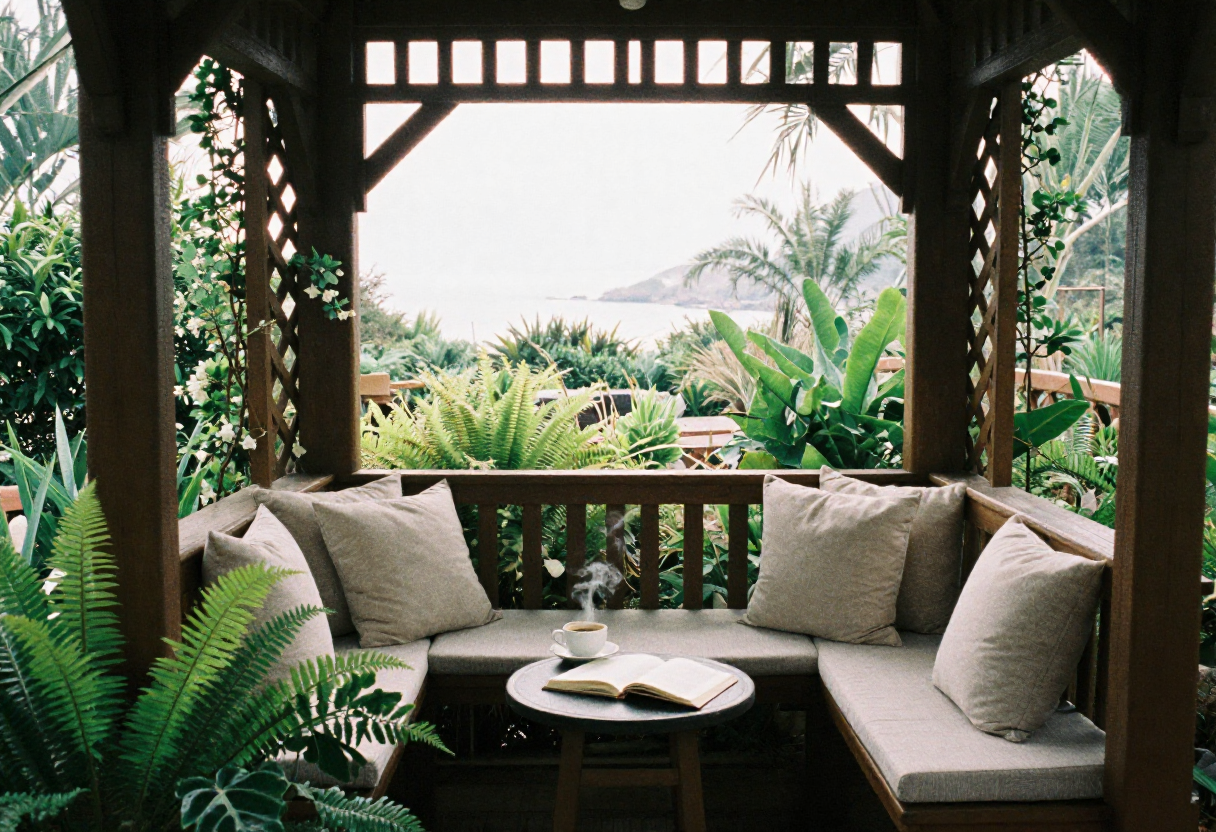
Garden gazebos work brilliantly for dividing larger yards into distinct areas with different purposes. You might have your entertaining zone near the house, then a gazebo creates a separate garden room for quiet activities, which makes your outdoor space feel bigger and more functional overall.
Good landscape design needs destinations – places that draw people through the garden and encourage exploration. A strategically placed gazebo gives visitors a reason to walk through your plantings and discover different areas of your property, which makes even modest-sized yards feel more interesting.
Gardens need structure beyond just beds and borders, and gazebos give you that three-dimensional framework around which you can design everything else. They become anchor points for your planting schemes and help organize what might otherwise feel like random garden areas without clear purpose.
Central Coast gardens often lack height variation, especially in newer developments with young trees. Garden gazebos immediately add vertical interest that creates depth and makes your landscape feel more established and mature than it actually is, which matters when you’re starting from scratch.
A well-positioned gazebo can frame specific views – whether that’s ocean glimpses, established trees, or just your best garden beds. They act like picture frames that direct attention to your property’s best features and create those Instagram-worthy moments everyone seems to want these days.
Gazebo structures give you perfect supports for climbing roses, jasmine, wisteria, and other vines that struggle without proper framework. This turns the gazebo into a living feature that changes with seasons and adds fragrance and beauty beyond the structure itself.
Traditional Octagonal or Hexagonal – These classic gazebo shapes have been popular for generations because they work in almost any garden style. The multiple-sided design creates interesting shadow patterns and allows views in all directions, making them ideal for properties where you want to enjoy multiple garden areas from one central spot.
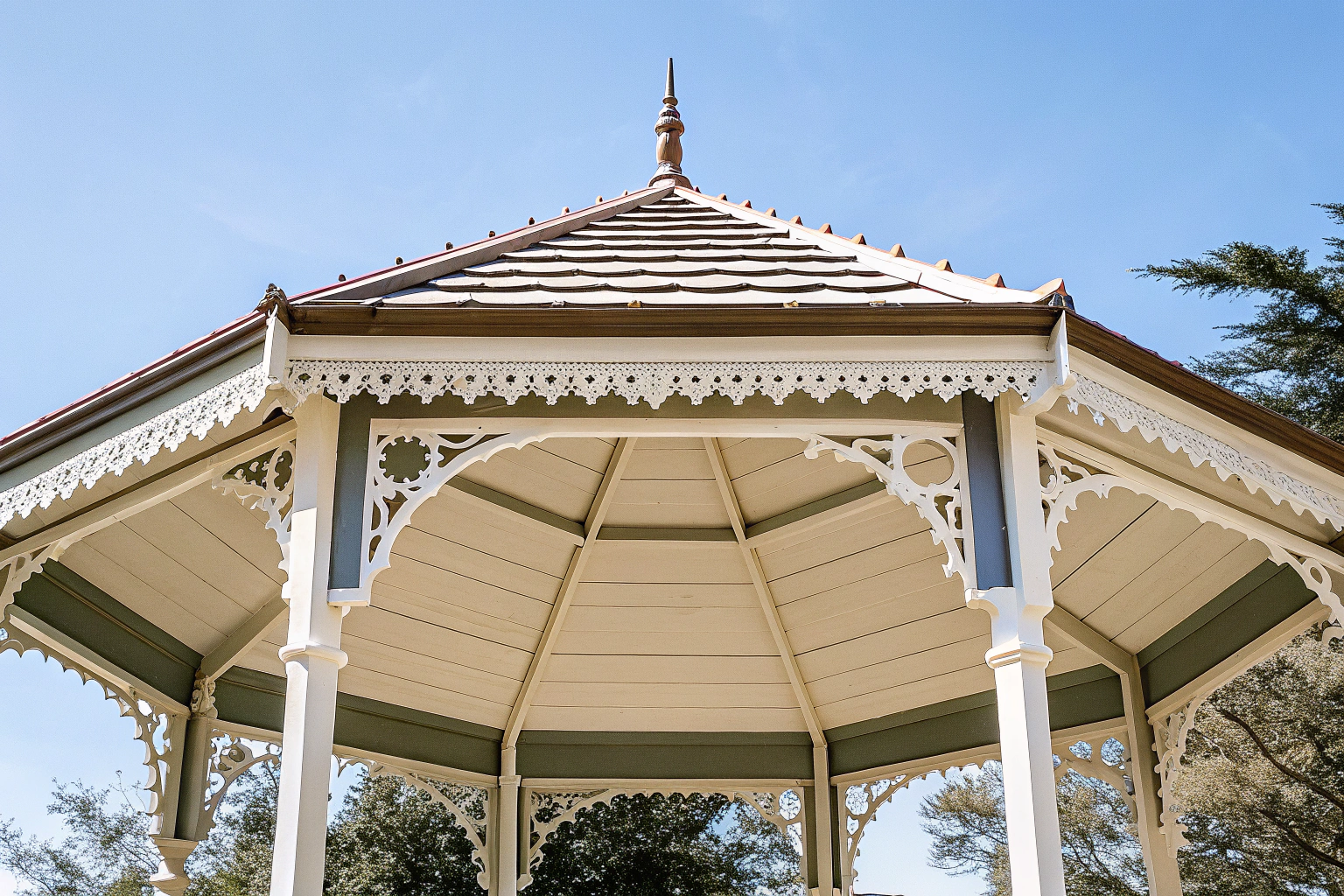
Romantic Victorian-Inspired – Victorian-style gazebos with decorative trim, turned posts, and ornate details suit Central Coast heritage homes and cottage-style gardens beautifully. They create that storybook garden feeling without being overly fussy, especially when you let climbing roses or jasmine soften the structure naturally.
Asian-Influenced Pavilions – Asian pavilion styles with clean lines and upturned rooflines work surprisingly well in coastal gardens. They bring a zen quality and pair nicely with contemporary landscaping, plus their simple forms tend to age gracefully and don’t compete with busy garden plantings.
Contemporary Minimalist – Modern gazebos with clean lines, minimal ornamentation, and geometric forms suit newer Central Coast homes and properties where you want garden structures to complement rather than dominate. They’re particularly effective in drought-tolerant or native plantings where a fussy design would feel wrong.
Rustic Cottage Garden Features – Rustic gazebos with natural timber, simple construction, and unpretentious charm fit perfectly in informal cottage-style gardens. They look like they’ve always been there rather than recently installed, which is exactly the vibe many Wyoming and Narara properties are going for.
Modern Geometric Designs – Contemporary geometric gazebos with angular forms and bold lines create striking focal points in modern landscapes. They work particularly well as statement pieces in minimalist gardens where you want architectural drama without traditional ornamentation cluttering the design.
Custom Styles Matching Property – The best garden gazebos often come from custom designs that match your property’s existing character. Whether you’ve got a 1980s brick home or a contemporary build, designing a gazebo that complements your architecture creates cohesion that makes everything feel intentional.
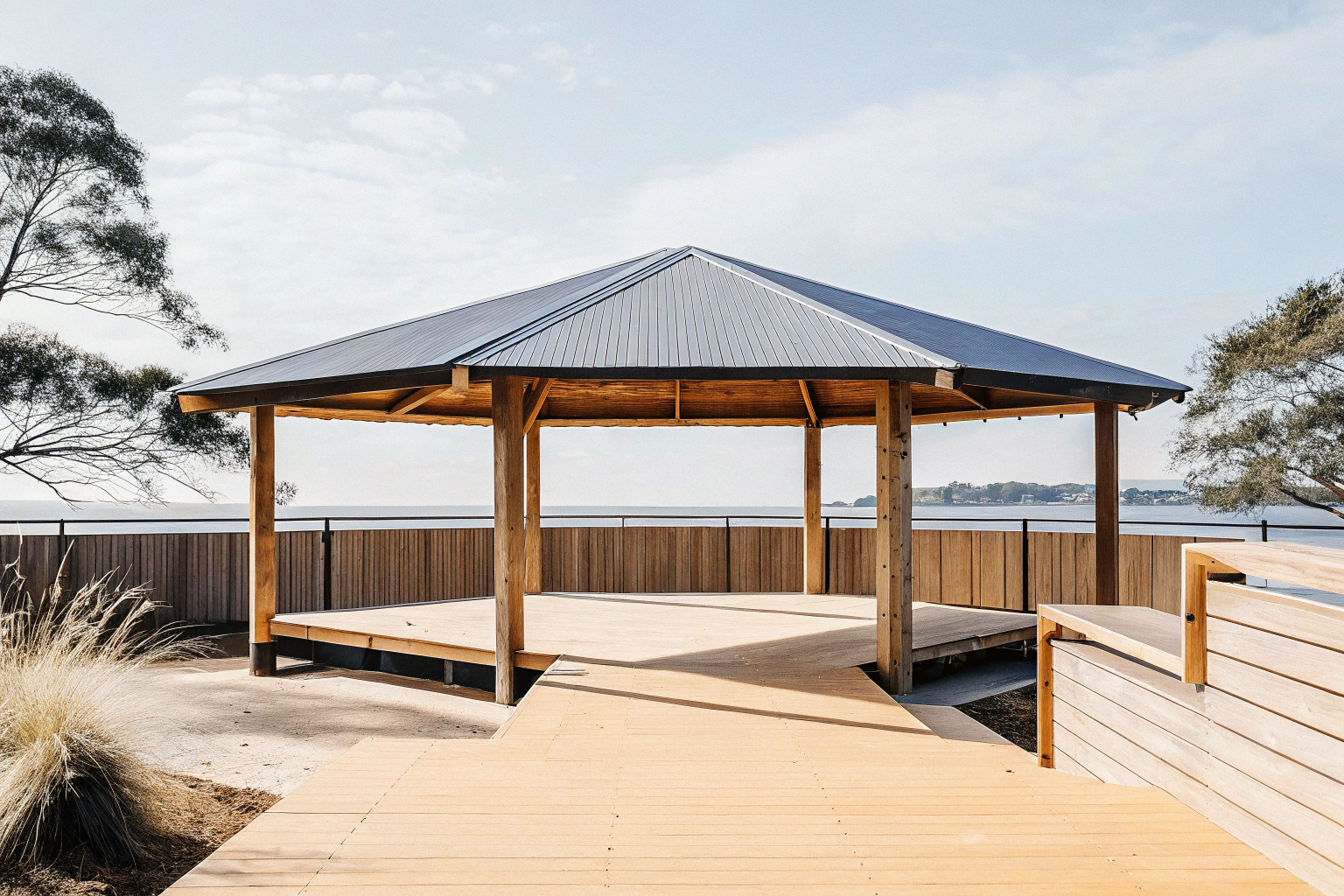
Garden gazebos make the most of the Central Coast’s mild coastal climate by creating outdoor spaces that can be enjoyed year-round. They provide essential shade from strong summer sun and shelter from light, unpredictable rain, allowing you to spend more time outdoors instead of retreating inside during weather changes.
Built correctly, gazebos are designed to withstand coastal conditions like salt air, wind, and seasonal storms. Using weather-resistant, salt-appropriate materials ensures long-lasting performance while enhancing the relaxed coastal garden style that defines Central Coast living.
Using appropriate materials and proper construction techniques designed for coastal conditions separates quality pergola builders from those just assembling generic structures. The difference becomes obvious within a few years of installation.
Every Central Coast property has unique characteristics – slopes, views, existing features, microclimates. Custom gazebo designs that respond to these specifics create better results than one-size-fits-all approaches.
Working throughout the Central Coast from Wyong down through Gosford, across to Terrigal and the peninsula areas means understanding different local conditions. Properties in Woy Woy face different challenges than those in Erina Heights.
The best gazebo projects start with proper consultation that considers your garden’s existing design, future plans, and how a gazebo fits into the bigger picture. This prevents mistakes and creates genuinely integrated results.

Most garden gazebos we build around Gosford and Terrigal range from $6,000 for a basic timber structure up to $18,000 for something more elaborate with custom features and premium coastal-grade materials. Your biggest cost drivers are size, material choice, and whether you’re going for a simple design or something with built-in seating, decorative trim, and quality finishes that’ll handle our salt air. I always tell Wyoming and Narara homeowners to budget somewhere in the middle range if you want something that looks great and lasts without going overboard. Keep in mind that proper foundations in our sandy Central Coast soils and using materials that won’t corrode or rot in coastal conditions are worth paying for upfront rather than replacing the whole thing in five years.
Council requirements vary depending on your gazebo’s size and where you’re putting it on your block, but generally structures under 10 square meters that aren’t too close to boundaries often don’t need approval in most Central Coast council areas. That said, every property’s different, and Gosford Council has specific setback requirements that catch people out, especially on smaller blocks in places like Wamberal or newer estates in Warnervale. I recommend getting this checked properly before you start building because having to tear down a non-compliant structure is every homeowner’s nightmare, and I’ve seen it happen to folks who assumed they were fine. We handle all the council stuff for our clients because honestly, it’s easier to get it right the first time than fix it later.
Honestly, maintenance depends heavily on what materials you choose – timber gazebos need checking and re-treating every 2-3 years on the Central Coast because our salt air is brutal, while powder-coated aluminium or steel structures basically need a hose down occasionally and that’s about it. I’ve seen untreated timber gazebos in Terrigal and Woy Woy start showing weather damage within 18 months, which is why we always recommend either going with coastal-grade treated timber or considering metal frames if you want the lowest maintenance option. The plant integration stuff like climbing roses needs regular pruning and care, but that’s garden maintenance you’d be doing anyway. Central Coast conditions are actually pretty forgiving compared to further up the coast, but you can’t just ignore structures and expect them to look good forever.
Garden gazebos are fully roofed structures that provide complete overhead shelter, while pergolas have open slatted roofs that create partial shade and let some sun through. Gazebos work better if you want a proper garden retreat space that’s protected from rain and offers more privacy, whereas pergolas are usually attached to your house for outdoor entertaining areas where you want that indoor-outdoor flow. On the Central Coast, I see more people choosing pergolas for entertaining near the house and gazebos as destination features further out in the garden, and honestly, there’s no reason you can’t have both if your property’s big enough. The other big difference is gazebos typically have built-in flooring and feel more like little outdoor rooms, while pergolas are usually covering existing patio or deck surfaces.
Autumn through early spring is ideal for garden gazebo installation around here because you’re avoiding the worst of summer heat and our storm season, plus your garden recovers faster from any construction disturbance during cooler months. I try to steer clients away from January and February because that’s when we get those intense afternoon storms that can delay concrete work and make everything harder than it needs to be. That said, if you’re planning a spring garden party or want it ready for summer use, you need to start conversations with us by autumn at the latest because good builders book up and the whole process from design through installation takes 6-8 weeks minimum. Winter’s actually fine for construction on the Central Coast since our winters are so mild – we’re not dealing with frozen ground or snow delays like they are down south.
Call Us At (02) 4019 2014 or send through your details and we’ll be in touch about your garden gazebo project.