Material Choice Matters More Than People Expect
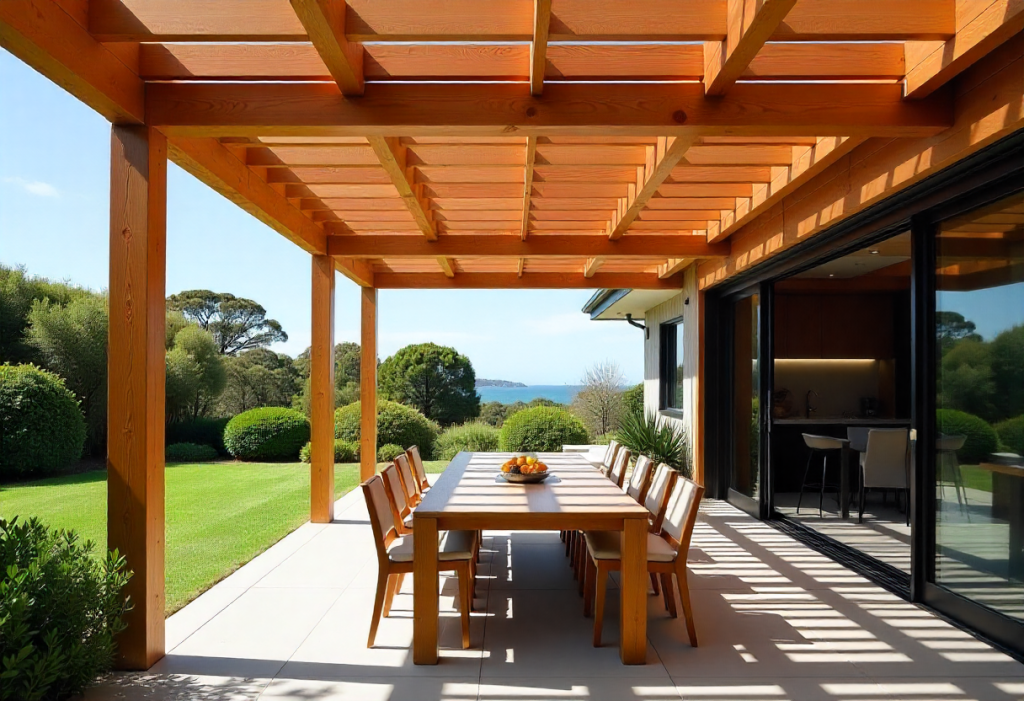
Not all timber performs the same way outdoors, and the difference shows up over years, not weeks. Treated pine is a common, cost-effective choice for pergola framing — it's readily available and suits a traditional look, but it generally needs more frequent attention (resealing, checking for movement) than hardwood. Hardwood timber costs more upfront but holds up better over the long run, which is why it's often the pick for premium builds or homes in heritage-style streetscapes.
If low maintenance is the priority rather than a timber look specifically, powder-coated aluminium and Colorbond steel are the alternatives worth comparing against timber — both require very little upkeep compared to any timber option, though obviously they don't give you the same natural aesthetic.
See our Custom Timber Pergolas service →Why Coastal Exposure Changes the Equation
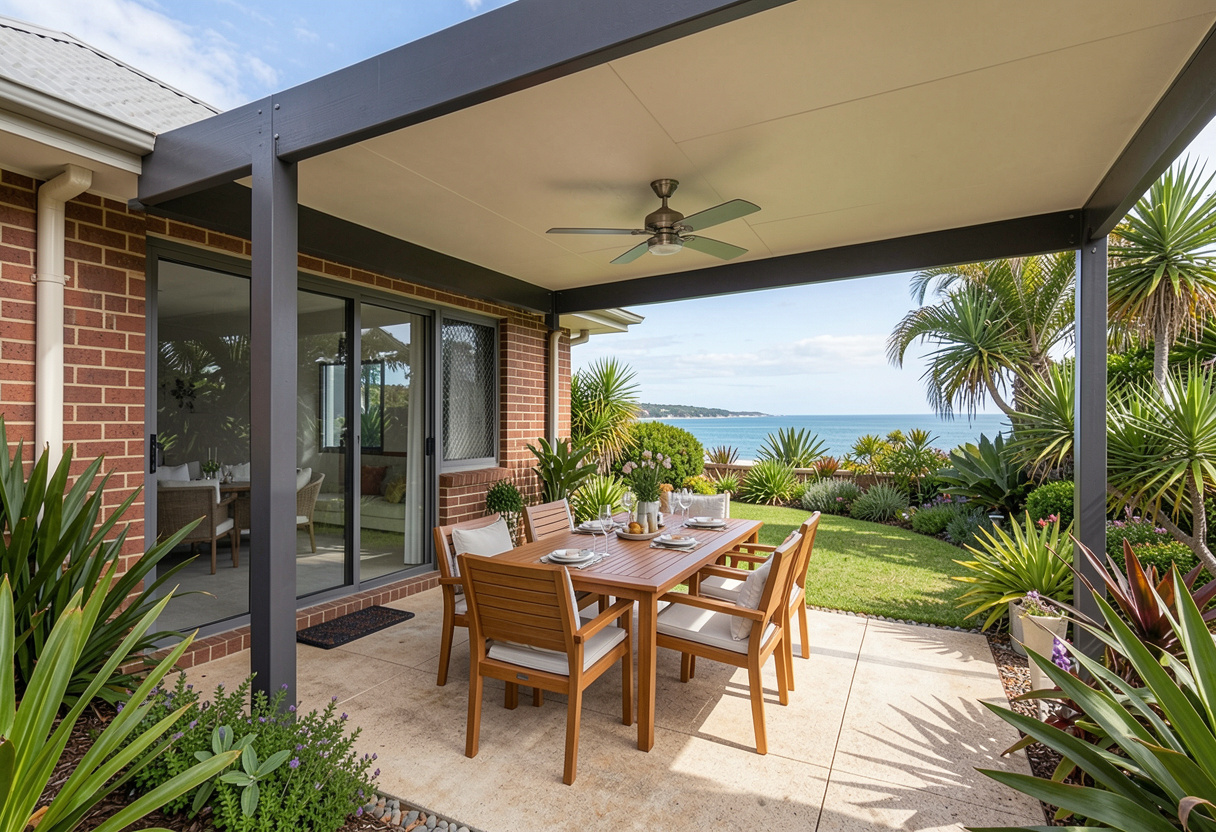
The Central Coast isn't a single climate — a block right on the water in a suburb like Copacabana or Avoca Beach copes with far more salt-laden air than an inland pocket further from the coast. That marine-influenced air is a genuine factor in how any outdoor structure performs over time, timber included, which is exactly why material selection is treated as a real consideration on our local project pages rather than a purely aesthetic choice.
In practice, this means two homes on the same street can get different advice from us depending on which direction they face and how exposed the block actually is — there's no substitute for an on-site assessment when durability is the main question.
What This Means for Your Build
If your block sits close to the water, leaning toward hardwood over treated pine, or considering a hybrid approach (timber posts with a Colorbond or aluminium roof system), is a reasonable way to balance the look you want against the conditions the structure will actually face.
Maintenance: The Factor Most Homeowners Underestimate
Even the right timber, in the right location, still depends on upkeep. Appropriate sealants and finishes need to be applied and reapplied over time — skip this and even a well-chosen hardwood will show its age faster than it should. This isn't a large ongoing job, but it is a genuine one, and it's worth factoring into your decision alongside the upfront cost of the timber itself.
If ongoing maintenance isn't something you want to take on, that's a legitimate reason to lean toward aluminium or Colorbond instead — there's no wrong answer here, just a trade-off between upfront cost, ongoing effort, and the aesthetic you're after.
See a local example: pergola materials for Erina's climate →Signs Your Timber Pergola Needs Attention
Timber ages visibly before it ages structurally, which is actually useful — it gives you a warning before anything becomes a real problem. Greying or silvering timber that hasn't been resealed in a while is the most common early sign; it looks worse than it is, but it's a cue that the protective finish has worn thin and moisture can start getting in if it's left much longer.
Beyond colour, worth checking periodically: fixings and brackets for rust or looseness (more relevant close to the coast), any visible splitting or cracking along the grain, and slight movement in posts or beams that wasn't there when the structure was new. None of these are emergencies on their own, but they're the kind of thing worth mentioning at your next maintenance check rather than ignoring for another year.
If in doubt, a quick assessment is far cheaper than waiting until a repair is unavoidable — this is the same principle behind the free on-site consultations we offer before any new build.